 Hire Compass HQ
What to Expect in a Restaurant Server Interview
A stage-by-stage look at server hiring, from the first phone screen to the paid trial shift, plus the questions managers actually ask at each point.
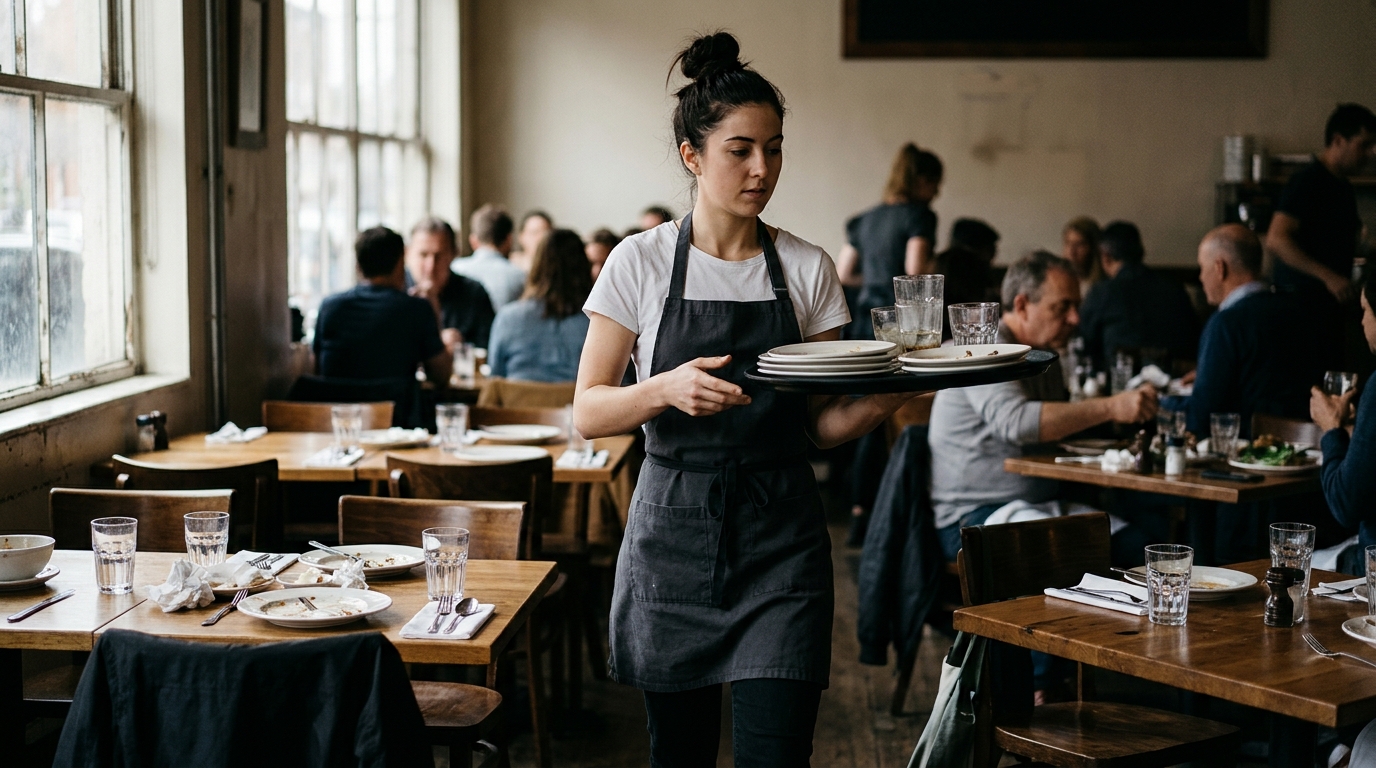
Restaurant server hiring is short and practical. The typical path runs a phone screen, a structured interview with a manager, then a working interview or trial shift before an offer (Deputy, undated), with questions about availability, a difficult guest, teamwork during a rush, and why this restaurant (Coril, undated).
Timing depends on the room. A busy casual restaurant may screen you and schedule a trial in the same week; fine dining, hotel banquet departments and multi-unit groups add another manager and move more slowly.
Overview of the Restaurant Server Hiring Process
Most restaurant server candidates go through one to three rounds, spread over two days to about three weeks. A neighborhood diner or fast-casual spot that needs weekend coverage may screen you by phone on Monday and put you on a trial shift by Thursday. A fine-dining room, hotel banquet operation or a restaurant group with a corporate HR function usually adds a second manager, a reference check and a scheduled trial, which stretches the timeline.
The shape is consistent across the field: screening applications, an interview often paired with a working interview or trial shift, then an offer (Crewli, undated). The first step is usually a phone or in-person screening interview, sometimes followed by on-site training or a trial shift supervised by a current server or manager (Megainterview.com, undated).
Two things shape how you're assessed. Servers typically learn on the job through short-term on-the-job training (U.S. Bureau of Labor Statistics, 2025), so managers weigh availability, attitude and composure more heavily than a resume. And if the restaurant serves alcohol, you must be familiar with state and local laws concerning the sale of alcoholic beverages (U.S. Bureau of Labor Statistics, 2025) — expect questions about carding, cutting guests off and any state-required alcohol server card.
Pay is structured as a base wage plus tips, pooled or individual, with tip-credit rules set state by state. Ask how tips are split, and check current wage data with the BLS and your state labor department.
Typical Stages of the Interview Process
- Application and resume screen — 1 to 5 days. Read by the general manager, an assistant manager, or in a multi-unit group a recruiter or hiring coordinator. They check availability, commute and whether you've worked a similar service style.
- Phone or in-person screening interview — 10 to 20 minutes. Run by the hiring manager, assistant manager or shift lead. Covers open/close availability, weekends and holidays, start date, and any state-required alcohol service certification. This is the usual first step (Megainterview.com, undated).
- Structured interview with the manager — 20 to 45 minutes, often on-site between lunch and dinner. Led by the general manager, sometimes with the floor or service manager sitting in. Behavioral questions dominate: angry guests, teamwork during a rush, why this restaurant (Coril, undated).
- Menu or POS walk-through — 10 to 20 minutes. Usually run by a service manager or training server, either tacked onto the interview or at the start of the trial.
- Working interview or trial shift — 2 to 6 hours, occasionally a full shift. A stage shift is a working interview where a candidate spends time in the restaurant during actual service (7shifts, undated). You shadow a current server or run food under a lead's supervision. Under the federal Fair Labor Standards Act, time worked during a trial shift is paid time (Tumi Hospitality, undated).
- Final conversation and offer — same day to 1 week. Handled by the general manager or owner, often right after the trial while the floor team's feedback is fresh. References may be called here; schedule, section assignment, tip-out and training shifts are confirmed.
Interview Rounds at a Glance
| Stage | Format | Typical Duration | What It Evaluates |
|---|---|---|---|
| Screening interview | Phone call or quick chat at the host stand with a manager | 10–20 minutes | Availability across nights, weekends and holidays; service-style experience; alcohol certification where the state requires it |
| Manager interview | Seated, one-on-one or with a second manager, between services | 20–45 minutes | Behavioral stories about difficult guests and rushes; menu curiosity; why this restaurant over a competitor |
| Menu or POS walk-through | Informal, standing, led by a service manager or trainer | 10–20 minutes | How fast you absorb a menu section, allergen handling, comfort with the point-of-sale system |
| Working interview / trial shift | Live service, shadowing or running food beside a current server | 2–6 hours | Pace, tray and tableside mechanics, communication with the kitchen, behavior when a table turns sour |
| Final conversation | Short sit-down with the general manager or owner | 10–20 minutes | Floor-team feedback, schedule confirmation, tip-out and training plan |
Questions You're Likely to Be Asked at Each Stage
Screening interview: "What's your availability — can you work Friday and Saturday nights, and are you available for holidays?"
Availability is the fastest disqualifier, because work schedule variability was a requirement for most waiters and waitresses in 2024 (U.S. Bureau of Labor Statistics, 2024). The manager is building a schedule, not testing character. Give exact days and times, say which shifts you cannot cover, and name your start date.
Manager interview: "Tell me about a time you dealt with an angry or difficult guest. What did you do?"
This shows up in almost every restaurant interview and tests whether you stay pleasant under pressure (Coril, undated). The manager wants ownership without arguing, and evidence you know when to bring a supervisor in — most servers work under the presence of a supervisor for work review (U.S. Bureau of Labor Statistics, 2024).
Sample answer
On a Saturday night at a 90-seat Italian place, a four-top's entrees came out twelve minutes behind the rest of their section and the guest with the check was loudly asking for the owner. My job was to keep that table seated while three other tables in my section kept moving. I apologized without excuses, fired a complimentary appetizer through the POS, asked expo to flag the table as a re-fire priority, gave the guest a concrete time — six minutes — and came back at the four-minute mark. They stayed through dessert, and my manager approved the comp because I'd logged it correctly on the check.
Manager interview: "Why do you want to work here rather than another restaurant nearby?"
A preparation check (Coril, undated). Managers can tell in one sentence whether you've eaten there or read the menu. Name a dish, the service style (counter, full service, tasting menu, banquet), a recent change such as a new chef or a patio opening, and the specific competitor you considered instead.
Menu or POS walk-through: "A guest tells you they have a severe shellfish allergy — walk me through exactly what you do next."
This tests safety instinct, not memory. Say you flag the allergy in the POS, tell the expo and chef verbally rather than relying on the printed ticket, confirm affected dishes with the kitchen instead of guessing, and run the plate yourself.
Working interview / trial shift: "How did that shift feel compared with where you worked before?"
Asked at the end of the stage, usually by the server who trained you. They're checking self-awareness and whether you clocked the operation's rhythm — table turn times, side work, who runs food. Name one thing you picked up and one you want more reps on.
Final conversation: "Do you have any questions for us?"
Ask what only a server would ask: how sections are assigned and rotated, whether tips are pooled or individual and what the tip-out to bar and bussers is, how many training shifts you get before working the floor alone, and whether servers run their own food or there's a dedicated runner.
Frequently asked questions
Do I need a diploma or formal training to be hired as a server?
Waiters and waitresses typically do not need formal education to enter the occupation and usually learn through short-term on-the-job training (U.S. Bureau of Labor Statistics, 2025). In an O*NET survey, 58% of respondents said a high school diploma or equivalent is required and 32% said less than a high school diploma is required (O*NET OnLine, 2025). Requirements vary by employer.
Should I be paid for a trial shift?
Under the federal Fair Labor Standards Act, time worked during a restaurant trial shift is paid time (Tumi Hospitality, undated), and some restaurants ask for a trial of a few hours which in most places should be paid (The ESL Room, undated). Confirm in writing how the trial will be recorded before you work it, and check your state labor department for state rules.
What should I wear to a server interview?
Match the room. Fine dining and hotel banquets expect pressed black trousers or a skirt, a collared top and closed non-slip shoes; casual spots expect clean, tidy basics. Bring slip-resistant shoes in case of a same-day trial — on average, servers spend most of the workday standing rather than sitting (U.S. Bureau of Labor Statistics, 2024).
Sources
- U.S. Bureau of Labor Statistics — Waiters and Waitresses : Occupational Outlook Handbook (2025)
- O*NET OnLine — 35-3031.00 - Waiters and Waitresses (2026)

Written by
Priya turns job-market numbers into something readable, chasing the story behind a wage chart or an unemployment figure. She's most interested in what statistics miss about an actual day at work.