 Hire Compass HQ
Medical Assistant Resume Examples and Writing Tips
Which certification to list first, how to name the chart system you trained on, and how to turn rooming and vitals into bullets a clinic manager can measure.

A strong medical assistant resume proves three things fast: that you hold (or are sitting for) a recognized certification, that you have worked in a named electronic health record system, and that you can cover both clinical and administrative duties, which the U.S. Bureau of Labor Statistics (2025) describes as the core of the job. Clinic managers and health-system recruiters screen for credential names, scope-of-practice detail, and patient volume, not adjectives.
This guide walks through each resume section, the keywords an applicant tracking system scans for in healthcare hiring, how to pick a format if you are changing careers or returning after a gap, and finished sample bullets you can adapt.
What Hiring Managers Look For in a Medical Assistant Resume
Clinic managers screen for a short list of concrete items before they read anything else.
Certification, written exactly as issued. Most states do not require certification, but employers may prefer or require it, and some require Basic Life Support certification (U.S. Bureau of Labor Statistics, 2025). Postings often name several accepted bodies interchangeably: one sampled employer posting accepted CMA (AAMA), RMA (AMT), CCMA (NHA), NCMA (NCCT) or CMAC (AMCA) (CareerOneStop Job Finder, Parkview Health posting), and another required clinical medical assistant certification by AAMA, AMT, NCCT, NAHP, AAH or NHA upon hire (CareerOneStop Job Finder, Rush University Medical Center posting). Mirror the acronym the posting uses.
The chart system. O*NET (2026) lists medical and EHR software including Epic Systems, eClinicalWorks and MEDITECH, plus scheduling, billing and diagnostic-coding software. Naming the product you used is what gets a resume past keyword screening.
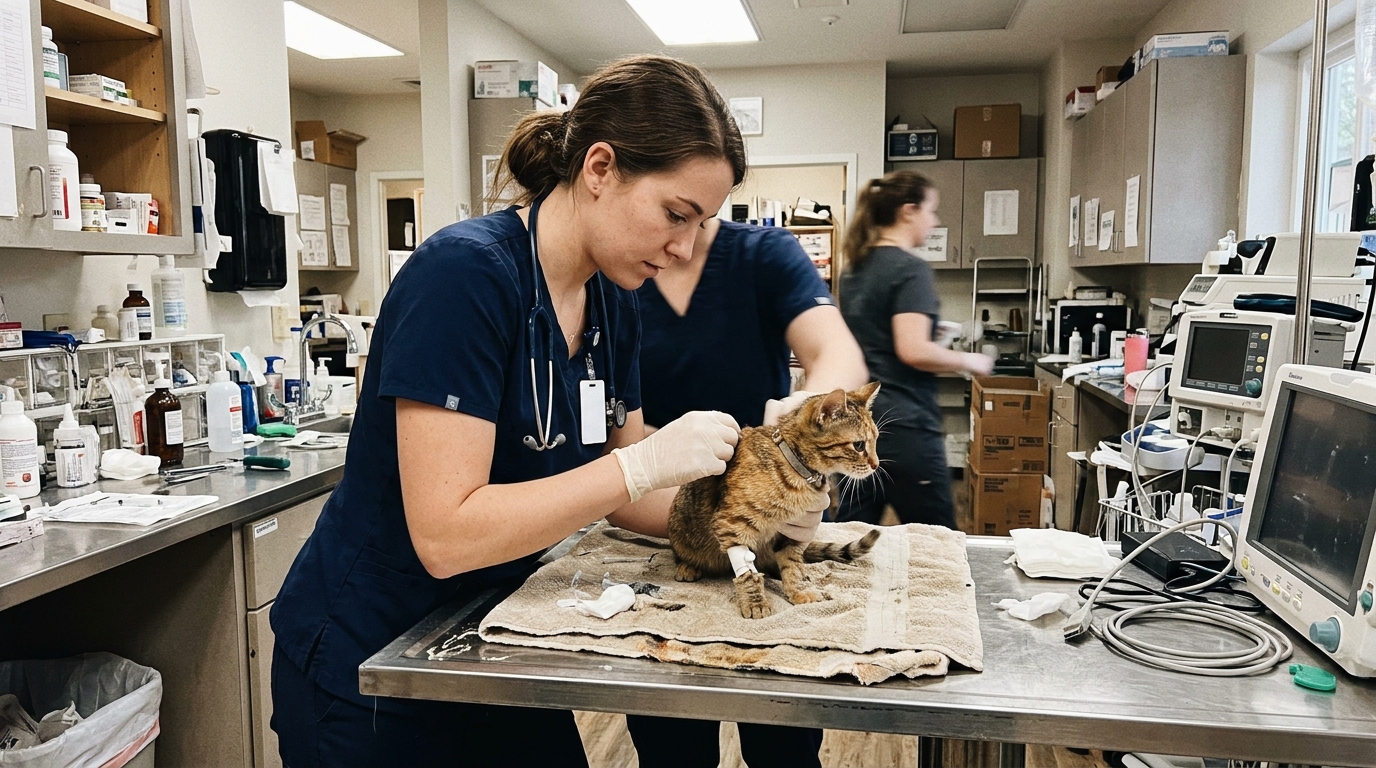
Both halves of the job. The role combines administrative and clinical work — interviewing patients and recording history, measuring vital signs, assisting with exams, giving injections or medications as permitted by state law, scheduling, collecting lab specimens, entering data into records and maintaining supply inventory (U.S. Bureau of Labor Statistics, 2025). A resume that covers only front desk or only back office reads as half-trained.
Training and accreditation. Typical entry-level education is a postsecondary nondegree award (U.S. Bureau of Labor Statistics, 2025). List your program's accreditor beside the school name, because CAAHEP- or ABHES-accredited graduates are eligible for the CMA (AAMA) exam (American Association of Medical Assistants).
Detail orientation, which the Bureau names as an important quality, should show in precise charting bullets rather than in a traits list (U.S. Bureau of Labor Statistics, 2025).
How to Build the Resume, Section by Section
- Header. Put your name, then your credential on the same line as it appears on your certificate — "Dana Okafor, CMA (AAMA)" — followed by city and state, phone, and a professional email address. Add the state because scope of practice for injections and medication administration is set by state law (U.S. Bureau of Labor Statistics, 2025).
- Summary, three lines maximum. State years of clinical experience, setting type, EHR, and credential status. Example: "Certified medical assistant with 3 years in a 5-provider family practice. Rooms 30+ patients daily, draws blood, runs CLIA-waived testing, and documents in Epic. CMA (AAMA), BLS current through March 2027."
- Certifications and licenses. Give each credential its own line with the issuing body and expiration or renewal date. The CMA must be renewed every five years through continuing education units or re-examination (O*NET OnLine), and the RMA from American Medical Technologists carries a three-year renewal period (DOD COOL). If you are scheduled to sit an exam, write the exam name and test date — never imply you already hold it.
- Experience, newest first. For each job give employer, specialty, city and state, dates by month and year, and the panel size or provider count. Then write bullets that split clinical and administrative work: rooming and vitals, injections within your state's scope, specimen collection, instrument sterilization, scheduling, prior authorizations, and inventory.
- Externship or practicum. Postsecondary programs typically include a supervised practicum or internship (U.S. Bureau of Labor Statistics, 2025). If you have under a year of paid experience, treat it as a job entry: site type, hours completed, and the procedures you performed.
- Skills. Group into Clinical, Systems and Administrative so a reader scanning for "venipuncture" or "eClinicalWorks" finds it in two seconds.
- Education. School, city and state, program name, credential earned, completion month and year, and the accreditor. Add relevant coursework such as medical terminology, anatomy and pharmacology if you graduated recently (U.S. Bureau of Labor Statistics, 2025).
Skills and Keywords to Include
Use only the ones you have actually performed, and match the wording of the posting where it differs.
- Vital signs: blood pressure, pulse, respiration, temperature, height and weight
- Patient rooming, intake interviewing and medical history documentation
- Venipuncture and capillary blood collection
- Injection administration: intramuscular, subcutaneous, intradermal, within state scope
- Vaccine administration, handling and cold chain documentation
- 12-lead EKG setup and acquisition
- CLIA-waived point-of-care testing: urinalysis, rapid strep, glucose, hemoglobin
- Specimen collection, labeling, processing and lab courier logs
- Instrument cleaning, autoclave sterilization and contaminated-waste disposal
- Assisting providers with exams and minor office procedures
- EHR documentation: Epic Systems, eClinicalWorks, MEDITECH (O*NET OnLine, 2026)
- Appointment scheduling and calendar software
- Medical billing and invoicing software
- ICD-10-CM and CPT coding and classification software
- Prior authorizations, referrals and insurance verification
- Microsoft Office; Microsoft Access for patient data queries
- HIPAA privacy compliance and release-of-information handling
- Supply and vaccine inventory, par levels and expiration audits
- Certifications: CMA (AAMA), RMA (AMT), CCMA (NHA), NCMA (NCCT), CMAC (AMCA), BLS
Resume Format Options Compared
| Format | How it works for medical assistants | Risk in this field | Recommended for |
|---|---|---|---|
| Chronological | Lists clinics newest first; lets a manager see specialty progression, provider counts and whether your BLS and certification stayed current | Any gap in clinical hours is visible, and employers may question whether your injection and phlebotomy skills are current | Certified MAs with continuous clinic work in the last two years |
| Functional | Groups skills as Clinical, Front Office and EHR with no dated job history | Health-system screeners often read it as hiding a lapse in licensure or patient-contact hours; it also hides which state you practiced in, which matters for scope | Rarely the right choice; consider only if your clinical experience is entirely from an externship |
| Combination | Short skills summary with EHR and credentials up top, then dated roles underneath | Runs long if you repeat the same rooming and vitals bullets under every clinic | Career changers from retail or caregiving, parents returning after a gap, and new graduates with a 160-hour externship plus unrelated paid work |
For most applicants, a combination resume of one page — two if you have five or more years across multiple specialties — gives the screener credentials first and dated proof second. Length is a recommendation, not a rule; follow any page limit the posting states.
Sample Resume Bullets
Adapt the structure, not the numbers. Use figures you can defend in an interview.
Rooming and vitals, high-volume primary care
Roomed and interviewed an average of 32 patients per day at Clearwater Family Medicine, recording vital signs, medication reconciliation and chief complaint in Epic before provider exam.
Injections within state scope
Administered roughly 600 intramuscular and subcutaneous injections per year, including influenza and Tdap vaccines, under provider supervision and within Ohio scope-of-practice rules, with no documented administration errors.
Phlebotomy and specimens
Collected and processed 45 venipuncture and urine specimens weekly for Brightline Internal Medicine, cutting mislabeled-specimen returns from six per month to one after rewriting the two-identifier labeling checklist.
EHR documentation
Documented encounters, test results and referrals for four providers in eClinicalWorks, closing 95 percent of charts the same business day.
Sterilization and room turnover
Cleaned, packaged and autoclaved surgical instruments and turned over 12 exam rooms daily, maintaining sterilization logs that passed two unannounced infection-control audits.
Inventory control
Rebuilt par levels for vaccines and exam supplies at a five-provider clinic, reducing emergency same-day orders from nine per quarter to two and eliminating three expired-stock write-offs.
Scheduling and authorizations
Submitted 25 to 30 prior authorization requests weekly and tracked outcomes in Microsoft Excel, shortening average approval turnaround from six to four business days.
Point-of-care testing
Performed CLIA-waived urinalysis, rapid strep and glucose testing for about 18 patients per day, logging results in MEDITECH and flagging critical values to the provider within five minutes.
Externship, new graduate
Completed a 180-hour supervised externship at Harbor Pediatrics, rooming 15 to 20 patients per shift, assisting with well-child exams, and recording immunization histories in the clinic's EHR.
Training others
Precepted four medical assisting externs through their clinical rotations, writing competency checklists for rooming, EKG setup and specimen handling.
Before You Submit Checklist
- File saved as FirstLast_MA_Resume.pdf, unless the posting asks for .docx
- Credential written exactly as issued — "CMA (AAMA)" or "RMA (AMT)" — not "certified medical assistant" alone
- Every certification line includes the issuing organization and the expiration or renewal month and year
- Basic Life Support certification listed with issuer and expiration date
- At least one EHR named by product, in both the skills section and an experience bullet
- At least three bullets contain a number: patients per day, specimens per week, or authorizations per week
- City and state listed for each clinical role, so scope of practice is clear
- Program accreditor (CAAHEP or ABHES) stated next to your school and program name
- Externship or practicum entry includes hours completed and setting type if you have under one year of paid clinical work
- Every clinical acronym spelled out at first use: EKG, CLIA-waived, IM, PO
- No patient names, initials, medical record numbers or dates of service anywhere on the document
- Employment dates in month/year format, with any gap longer than six months accounted for in the experience section or cover letter
- Keywords from the posting's required-certification list used verbatim where they apply to you
Frequently asked questions
Should certifications go above or below my work experience?
Above, if you hold one. Employer postings frequently require certification at hire or shortly after — one sampled posting required certification by AAMA, AMT, NCCT, NAHP, AAH or NHA upon hire (CareerOneStop Job Finder, Rush University Medical Center posting). A screener who cannot find your credential in the top third may stop reading. Put certifications and Basic Life Support directly under your summary, then experience, then education.
I trained but never certified. What do I put?
List your program, accreditor, completion date and externship hours, and state your exam plan honestly — for example, "CCMA (NHA) exam scheduled for June 2026." Never list a credential you have not earned. One RMA route requires graduation within the past four years from an accredited program with at least 720 instructional hours including a 160-hour externship (American Medical Technologists), so note your hours; they may qualify you.
How do I handle a gap since my last clinic job?
Name it plainly in a one-line entry — caregiving, school, relocation — and follow it with evidence your skills are current: a renewed Basic Life Support card, continuing education units, or recent per diem shifts. The CMA (AAMA) renews every five years through continuing education or re-examination (O*NET OnLine), and the RMA renews every three years (DOD COOL), so a current credential date does a lot of the reassurance work for you.
Which certification should I name if the posting lists several?
Name the one you hold, using the posting's exact acronym and issuing body. CareerOneStop's Certification Finder lists 27 certifications from 19 organizations for this occupation (U.S. Department of Labor), and employers often accept several interchangeably. Do not translate your credential into a different acronym to match. If you hold two, list both, newest renewal date first.
Should I put a desired salary on a medical assistant resume?
No. Leave pay off the resume and answer it in the application form or interview if asked. Wages vary by employer, industry and location, and the U.S. Bureau of Labor Statistics (2025) publishes current figures through its Occupational Employment and Wage Statistics data — check that for your state and metro area before naming a range, rather than relying on a figure from a job board.
Sources
- U.S. Bureau of Labor Statistics — Medical Assistants : Occupational Outlook Handbook (2025)
- O*NET OnLine (U.S. Department of Labor) — 31-9092.00 - Medical Assistants (2026)

Written by
Priya turns job-market numbers into something readable, chasing the story behind a wage chart or an unemployment figure. She's most interested in what statistics miss about an actual day at work.