 Hire Compass HQ
Call Center Job Application Checklist: What You Need
From typing test scores to seven-year background checks, here is what call centers actually ask applicants to produce and when they ask for it.
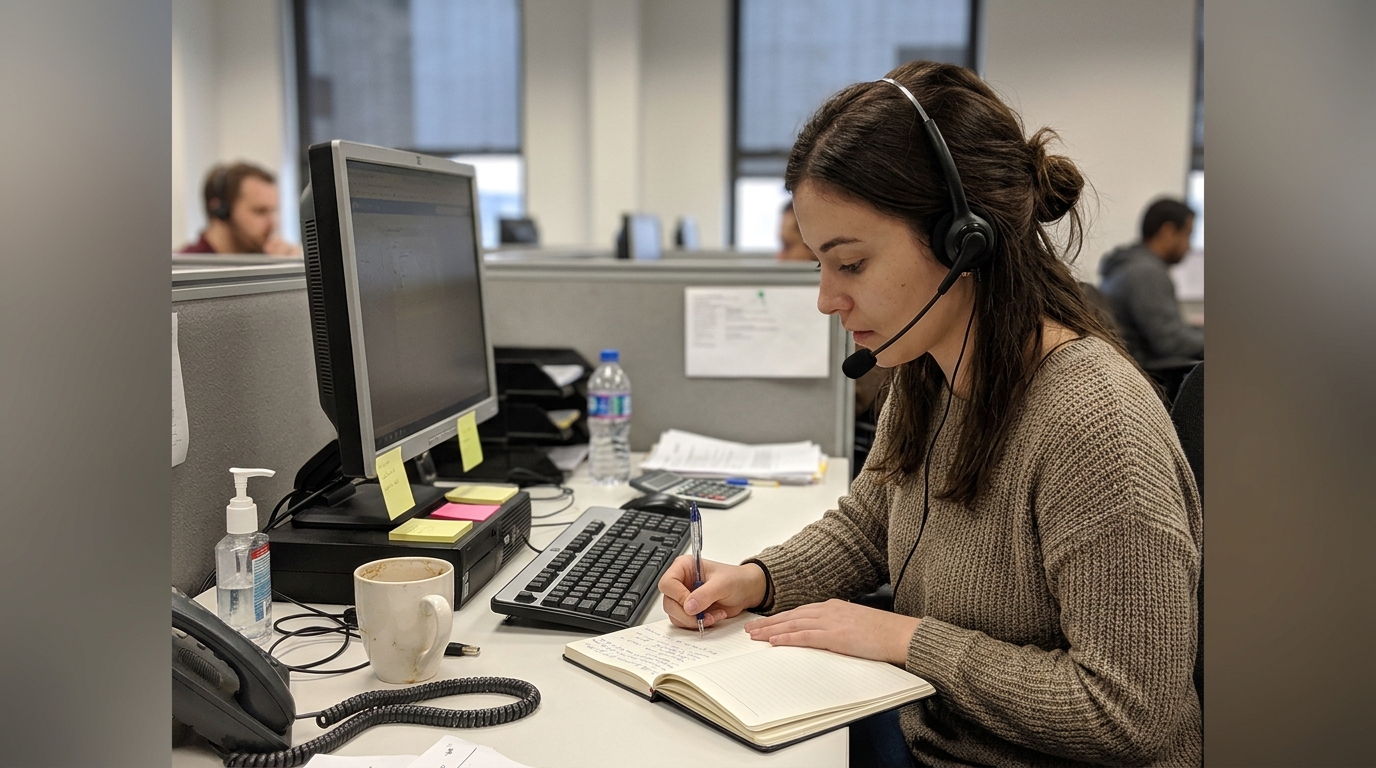
Applying for a call center job is less about a polished resume than about proving you can type, listen and handle a scripted conversation under time pressure. Most entry-level postings ask for a high school diploma or equivalent and train you on the job (U.S. Bureau of Labor Statistics, undated), but you will usually be asked to pass an assessment covering typing speed, grammar and a mock call before anyone talks salary.
This checklist covers the documents, accounts and practice you should have ready before you hit submit, plus how the hiring sequence tends to run and which application channels get the fastest answer.
What Employers Expect From Applicants
The baseline credential is modest. Customer service representatives typically need a high school diploma and are trained on the job (U.S. Bureau of Labor Statistics, undated), and people starting out usually have that diploma or equivalent, no work experience, and less than a month of on-the-job training (CareerOneStop, U.S. Department of Labor, undated). You will normally be asked for the diploma or GED only at offer stage, when HR verifies what you claimed on the form.
What gets checked earlier is skill. A contact center pre-hiring assessment commonly measures typing speed, customer service experience and the ability to listen while typing, often through an assigned typing test (TechRepublic, undated). Real postings set hard numbers: one temporary call center role required typing at least 40 words per minute plus two years of preferred call center experience (CareerOneStop job posting via The QTI Group, undated), while a financial services customer service role asked for a minimum of two years of experience and an associate's degree or higher in a relevant field (CareerOneStop job posting via Robert Half, 2025-10-07). Requirements vary widely by employer, industry and state.
Certifications are optional but exist. ONET lists 23 national certifications tied to this occupation, including the ISCET Customer Service Representative Certification, the Accredited Customer Service Representative credential from The Institutes, and the HDI Certified Customer Service Representative credential from HDI (ONET OnLine, U.S. Department of Labor, undated).
Background consent comes last. One posting required willingness to submit to a seven-year background check and drug screen upon acceptance of the position (CareerOneStop job posting via The QTI Group, undated).
Application Checklist
Prepare these before you open the application form — most online applications time out, and several of these items are asked for mid-form.
- A one-page resume listing job titles that match the posting's language. Sample reported titles for this occupation include Call Center Representative, Customer Care Representative (CCR) and Customer Service Representative (CSR) (O*NET OnLine, U.S. Department of Labor, undated).
- A recent typing test result — words per minute and accuracy percentage — taken on the keyboard you will actually use.
- Scanned high school diploma or GED certificate, saved as a PDF under 5MB.
- Three professional references with job titles, direct phone numbers and current email addresses, each asked in advance if they will take a call.
- Your full employment history with month and year start and end dates, plus supervisor names, for background-check forms.
- Government-issued photo ID and your Social Security card, for employment eligibility paperwork after an offer.
- A home-office readiness note if applying for remote work: internet download and upload speeds, headset model, and whether you have a wired connection.
- Any customer service certification certificate, such as the HDI Certified Customer Service Representative credential from HDI (O*NET OnLine, U.S. Department of Labor, undated).
- A quiet space and working headset booked out for a recorded phone or video screen.
- Two written resume bullets with real numbers, for example: "Handled 65 to 80 inbound calls per shift at Lakeside Utility Services while maintaining a 92 percent quality-monitoring score across six months."
- Your availability grid in writing — exact hours per day, including weekends, nights and holidays.
- Bilingual proficiency noted by language and level if you have it, since some assessments include a language test (Cohesyve, 2026).
Typical Hiring Timeline
Timings vary by employer, state and whether the site is hiring a class or a single replacement. Call centers tend to recruit groups of agents at a time because it is more cost-effective (Call Centre Helper, undated), so your start date may be set by the next training class rather than by how fast you clear each stage.
- Application submitted — day 0 to day 3. One hiring timeline guide recommends employers check initial applications within 1 to 3 days of a posting going live and review each application within 24 to 48 hours of arrival (business.com, undated).
- Recruiter or HR phone screen — roughly 3 to 5 days after you are flagged as promising (business.com, undated). Budget about ten minutes for it (firsthr.app, undated). Some recruiters treat an unannounced phone call as a free work sample (boostpoint.com, 2026), so answer unknown numbers professionally.
- Online assessment — usually within a few days of the screen. Expect a mix of a call or chat simulation, a typing or data entry check, scenario questions and sometimes a language or multitasking test (Cohesyve, 2026). For applicants with no experience, one described sitting was automated and covered grammar, typing and spoken English, usually Versant (sayoliver.ai, undated).
- Role play or mock call — same sitting or a separate 15 to 30 minute slot. A described interview process lists an English communication assessment evaluating grammar, pronunciation and fluency, a typing or computer skills test, and a mock call simulation (callcentertrainingtips.com, undated). Some screens finish with a five-minute role play (boostpoint.com, 2026).
- Final interview with a supervisor, team leader or operations manager — generally 7 to 14 days after initial screening (business.com, undated). Allow about forty-five minutes for the full interview (firsthr.app, undated).
- Offer, background check and drug screen — allow 3 to 5 business days for routine reference and background checks (business.com, undated), longer for a seven-year check or a public-program role where the check must clear before the start date (copilotinterview.com, undated).
Where and How to Apply
| Channel | Typical response time | Best use case | Watch for |
|---|---|---|---|
| Company career site | Reviewed within 24 to 48 hours of arrival at well-run employers (business.com, undated) | Large contact centers hiring a whole training class at once (Call Centre Helper, undated) | Long forms that re-ask your full employment history; have dates ready |
| Industry and general job boards | Varies; apply within the first 1 to 3 days of a posting, when employers check early applications (business.com, undated) | Comparing shift patterns, remote versus on-site, and stated typing requirements across many employers | Postings that restate the same duties; read the requirement line for the words-per-minute figure |
| Staffing or temp agency | Often the fastest, because the agency screens you once for several clients | Temporary and seasonal call center contracts, such as the temporary CSR posting requiring 40 words per minute (CareerOneStop job posting via The QTI Group, undated) | Clarify whether the role is temp, temp-to-hire or direct, and who runs the background check |
| Direct referral from a current agent | Usually days, since your name reaches the hiring manager before the queue | Sites running back-to-back training classes with referral incentives | Still complete the formal application; referrals rarely skip the assessment |
| Walk-in or on-site hiring event | Same day screening in many cases | Group hiring sittings covering typing ability, numerical tests and telephone role plays (Call Centre Helper, undated) | Bring photo ID and printed references; you may be tested on arrival |
Whichever channel you use, legitimate employers never ask candidates to pay for an application or for training (copilotinterview.com, undated).
Frequently asked questions
Do I need call center experience to apply?
Not usually for entry-level roles. People starting this career typically have a high school diploma or equivalent, no work experience, and less than one month of on-the-job training (CareerOneStop, U.S. Department of Labor, undated). Some postings do ask for more — one financial services customer service role required a minimum of two years of experience and an associate's degree or higher (CareerOneStop job posting via Robert Half, 2025-10-07). Read the requirement line before assuming.
When does the background check happen?
After you accept, not before. One temporary call center posting required willingness to submit to a seven-year background check and drug screen upon acceptance of the position (CareerOneStop job posting via The QTI Group, undated). Routine reference and background checks are often budgeted at 3 to 5 business days (business.com, undated), though some public-program roles require the check to clear before your start date (copilotinterview.com, undated). Rules vary by state and employer.
What is actually on the assessment?
Commonly a basic computer skills test, a typing speed and accuracy test, a personality assessment, a customer service situational judgment test and an attention to detail test (EmployTest, undated). Many employers combine a call or chat simulation, a typing or data entry check, scenario questions and sometimes a language or multitasking test (Cohesyve, 2026). Practise typing while listening — the ability to listen and type at once is specifically measured (TechRepublic, undated).
Is a customer service certification worth getting first?
It is rarely required, since most representatives are trained on the job (U.S. Bureau of Labor Statistics, undated). It can help if you are competing without experience. O*NET lists 23 national certifications for this occupation, including the ISCET Customer Service Representative Certification, the Accredited Customer Service Representative credential from The Institutes, and the HDI Certified Customer Service Representative credential from HDI (O*NET OnLine, U.S. Department of Labor, undated). Check current fees and requirements with each awarding body.
Why do applications sometimes stall for weeks?
Because call centers tend to recruit groups of agents at a time, as it is more cost-effective (Call Centre Helper, undated). If you clear every stage but the next training class is a month out, your start date waits. Interviews are generally completed 7 to 14 days after initial screening (business.com, undated), so a longer gap usually points to class scheduling rather than a problem with your application.
Sources
- U.S. Bureau of Labor Statistics — Customer Service Representatives : Occupational Outlook Handbook
- CareerOneStop (U.S. Department of Labor) — Occupation Profile for Customer Service Representatives

Written by
Felix writes a column on the inner life of work — burnout, ambition, the quiet math people do about whether a job is worth it. He prefers plain language to management jargon and says so often.